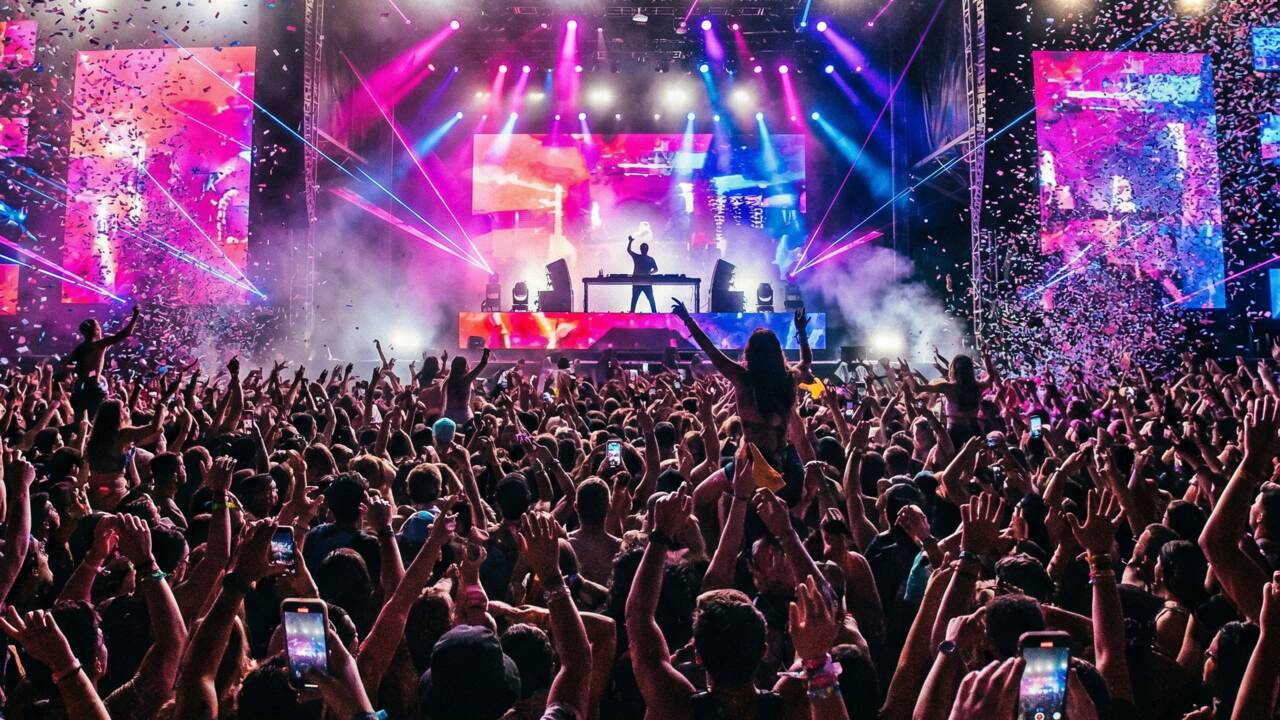
The business of events has changed

You created the event.
Why should the ticket be the end of your revenue opportunity?

Your attendees generate economic activity before, during and after the event. Mega Tickets connects ticketing with transportation, parking, hotels, food & drinks, networking, experiences and more — through one event ecosystem.

Tickets are only the beginning.

The economy around the venue

Look beyond the gate.

The economic impact of an event doesn't stop at admission.

Arrival
Getting there is a purchase decision — made before the doors open.
Parking
Every space around a venue is sold by somebody.
Hospitality
Drivers, staff and hospitality run on the same night your event does.

Every vehicle represents a transaction.

  • Transportation
  • Parking
  • Drivers
  • Reservations
  • Hospitality

How much of the economic activity created by your event is connected back to your business?

Mega Tickets is built to help organizers connect more of those opportunities to the event experience.

A question worth asking, not an accusation: services around an event are usually run by separate providers under their own commercial terms. This page is about which of them you can connect and measure.

Two models

The event didn't create one transaction.
It created an economy.

Traditional event model

  • Organizer creates the event
  • Attendee buys a ticket
  • Organizer monetizes Ticket and sponsors.
    • Ticket
    • Sponsors
  • Meanwhile, economic activity continues Often handled by separate providers, under their own commercial terms.
    • Transportation
    • Parking
    • Hotels
    • Food
    • Experiences
    • Networking
    • Memories

Nothing here is broken. It's simply spread across companies that don't talk to each other — and none of it shows up in the organizer's numbers.

The Mega Tickets model

  • Event
  • Ticket
  • Connected ecosystem Activated per event — only what fits the audience.
    • Mobility
    • Stay
    • Food & Drinks
    • Business
    • Social
    • Moments
    • Sponsors
  • More connected commerce opportunities Measured in one place, alongside ticket sales.

Opportunities, not guarantees. What an event actually earns beyond admission depends on attendee adoption, the services activated and the terms of the partners involved.

RevenueBeyondthe Ticket

A new way to measure the economic opportunity around your attendees.

Not every attendee will use every service. That's not the point.

The opportunity comes from connecting the right services to the right event — and measuring what happens beyond ticket sales.

The journey

One attendee.
More than one transaction.

Follow a single ticket buyer through an event weekend. Every step below is a real product in the ecosystem — activated only when the organizer turns it on.

Illustrative example

  1. Discovery

    Sarah discovers an event.

  2. Ticket

    She buys a $50 ticket. The organizer receives the full face value.

  3. Mobility

    She chooses parking or reserves transportation. Whichever the event has enabled.

  4. Stay

    If she's travelling, she sees nearby hotel options.

  5. Food & Drinks

    She pre-orders, or buys during the event.

  6. Connect

    She uses networking or social experiences, if they're relevant to this event.

  7. Moments

    She finds her photos after the event.

One ticket price is shown to make the journey concrete. We deliberately do not total it up: what an attendee spends beyond admission varies by event, city, audience and which services are switched on. Any figure we published today would be a guess, and a guess is not a forecast.

Fit, not feature count

The right ecosystem for the right event.

Activate what makes sense. Hide what doesn't. Mega Tickets adapts the ecosystem to the audience and the event model.

Concert / Festival

Large arrivals, long dwell time, heavy social afterlife.
  • Ticketing
  • ParkingBy event
  • Ride
  • Food & Drinks
  • Moments
  • Sponsors

Event mobility

How people arrive is part of the event economy.

Black CarSedan, chauffeur-driven.
SUVGroups and luggage.
SprinterLarger parties, one vehicle.
ParkingReserved on-site parking — a Mega Ride feature, not a separate brand. Coming soon
ShuttleScheduled routes to the venue. Coming soon
  • Some guests want premium transportation.
  • Some drive.
  • Some arrive in groups.
  • Some need parking.
  • Some events need shuttle operations.

Mega Ride is designed as the mobility layer of the event ecosystem — one place where arrival is planned, sold and measured, instead of five unrelated bookings your event never sees.

Mega Ride for organizers

Parking and shuttle are labelled from the platform configuration, not from this page. When they are limited to specific events, that is what the label says.

After the checkout

The checkout shouldn't end the relationship.

Fast checkout first. Everything else after.

Buying a ticket has to stay fast. Ecosystem offers belong where they help the attendee and don't cost you the sale.

  • On the confirmation page, once the ticket is already secured.
  • In the attendee dashboard, where the ticket lives until event day.
  • In event reminders, when arrival is actually being planned.

Deliberate product rule: nothing is inserted before the ticket converts. We won't add friction ahead of purchase without product data showing it pays for itself — and today we don't have that data, so we don't do it.

Organizer economics

Measure more than ticket sales.

One view of what your event generated — admission and everything connected to it.

Event economics — your next event Dashboard concept
Revenue Beyond the Ticket
Ticket GMV
Ecosystem GMV
Mobility GMV
Parking GMV
By event
Hotel GMV
Food & Drinks GMV
Attach rate

Nothing to show yet. Your ecosystem performance will appear here as attendees begin using connected services.

Shown as a concept of the reporting surface. Ticket sales, attendance and payouts are reported in the organizer dashboard today; ecosystem metrics populate per event as connected services are used.

The metric

Meet your attach rate.

The percentage of ticket buyers who purchase an additional event service.

You stop measuring only how many tickets were sold, and start understanding how attendees interact economically with the event.

Track it across

  • Ride
  • ParkingBy event
  • Hotels
  • Food & Drinks
  • Other connected services

Illustrative example

Ticket buyers 1,000
Parking reservations By event 150
Parking attach rate 15%

Numbers chosen to show the arithmetic, not to suggest a typical result. We have not published an average attach rate because we do not yet have enough connected-service volume to calculate one honestly.

The model

Simple ticketing.
Connected opportunity.

The ticket

What each side pays and receives.

Organizer receives full face value
Attendee service fee 2% + $0.99 per ticket
Who pays the fee The buyer, at checkout

Payment processing, partner services, taxes or event-specific charges may apply when applicable.

Full pricing detail

The ecosystem

What using Mega Tickets as your event platform unlocks.

When you use Mega Tickets as the event platform, you gain access to the connected ecosystem based on service availability and applicable partner terms.

  • Availability differs by service, city and event.
  • Some services are operated by partners under their own commercial terms.
  • Not everything is free. Third-party services carry their own costs where they apply.

Already using another ticketing provider?

Selected Mega ecosystem products may be available independently, without moving your ticketing.

Explore Ecosystem Solutions

Sell · Connect · Measure

Your ticketing platform can be more than a checkout.

Sell

  • Ticketing
  • Checkout
  • Check-in

Connect

  • Mobility
  • Hotels
  • Food
  • Networking
  • Experiences

Measure

  • Ticket revenue
  • Ecosystem GMV
  • Attach rate
  • Audience behaviour

If you already need multiple tools to run your event, Mega Tickets is designed to connect more of that experience in one ecosystem.

Two ways in

Two ways to use the ecosystem.

Both are real doors. One of them is simply fewer moving parts.

Using Mega Tickets

Ticketing and ecosystem on one platform.

  • Ticketing
  • Ecosystem access
  • Integrated attendee identity
  • Connected event dashboard
  • Unified event journey

Using another ticketing provider

Ecosystem products alongside your current setup.

  • Selected ecosystem products
  • Standalone implementation
  • Separate commercial terms
  • Integration requirements may apply

Both routes are supported. Which one costs less depends entirely on your event, your volume and the services involved — so we don't publish a comparison that pretends otherwise.

Case studies

Real event economics.
Coming from real events.

As ecosystem transactions grow, Mega Tickets will publish verified organizer case studies. Until an event has generated them, there is nothing here to show — and we would rather show nothing than an illustration dressed as a result.

  • Ticket GMV
  • Ecosystem GMV
  • Attach rate
  • Incremental organizer revenue opportunities
  • Service adoption

Your event is already creating an economy.

The question is how much of it you can connect, measure and grow.

Revenue Beyond the Ticket™

Talk to our team

Tell us about your event.

We'll come back with which parts of the ecosystem actually fit it — and which ones we'd leave switched off.

Please enter your name.
Please enter a valid email.
Please enter your organization name.
Please select a ticket volume.

No spam. We only use this to reply about your event. Nothing here creates an account or a commitment.

Got it. We'll be in touch.

Someone from the team will reply about your event, usually within one business day.

or prefer to talk first?