For event organizers
Ticketing, operations and connected ecosystem tools designed around the complete attendee experience — from the moment someone finds your event to the photos they look at the week after.
What the platform does
Sell it, run it, connect it, measure it. Everything below is a product surface an organizer touches — not a roadmap.
Sell, Operate and Measure are live in the organizer dashboard today. Ecosystem metrics populate per event as connected services are used — see what's available now.
How it works
Seven steps — and you can be selling after the first two.
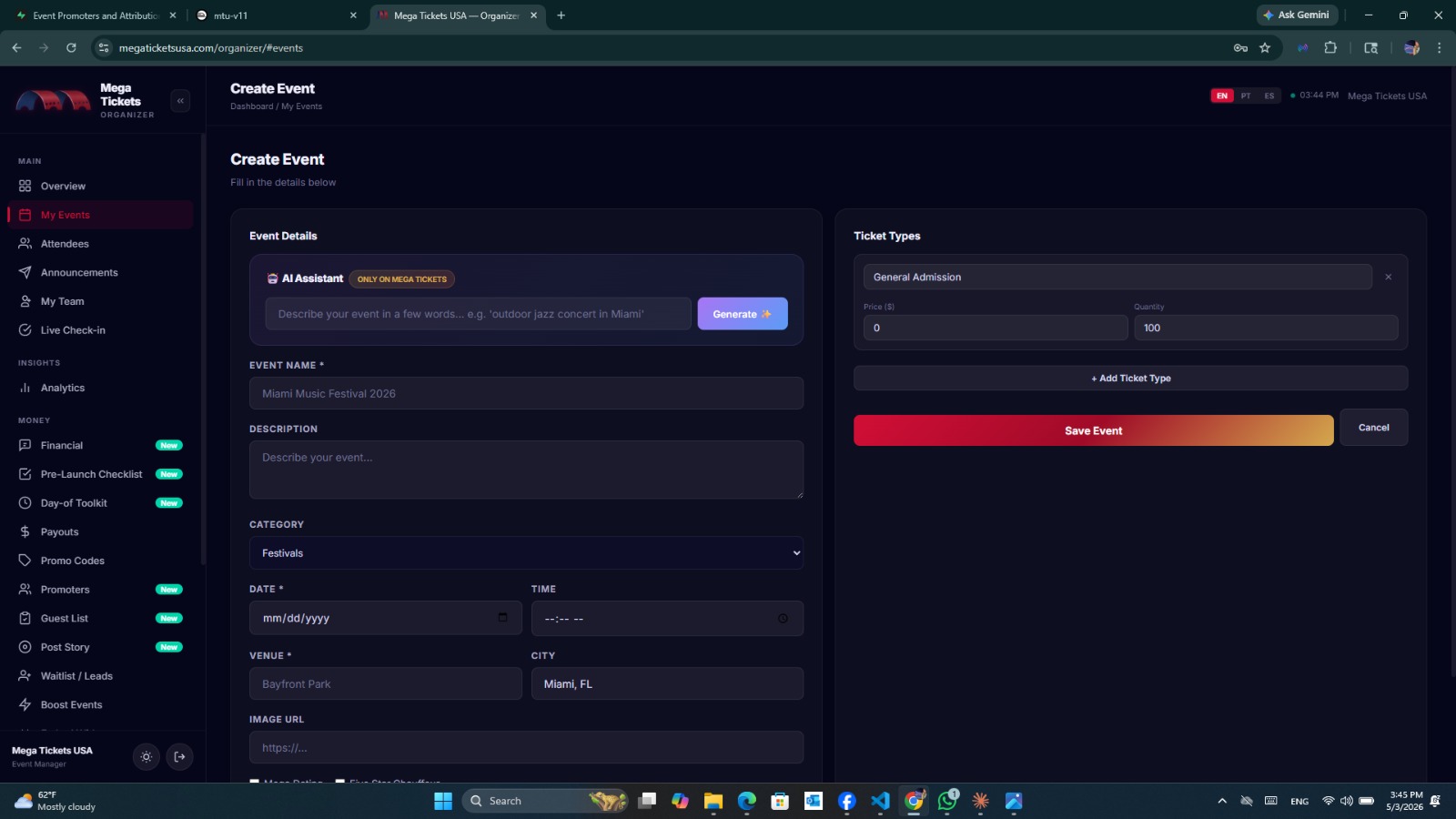
Name, date, venue, capacity. Publish when you're ready.
Tiers, pricing, presale, comps, promo codes and group bundles.
Turn on what fits this audience. Leave the rest off.
Share the event page, sell on web and in the app.
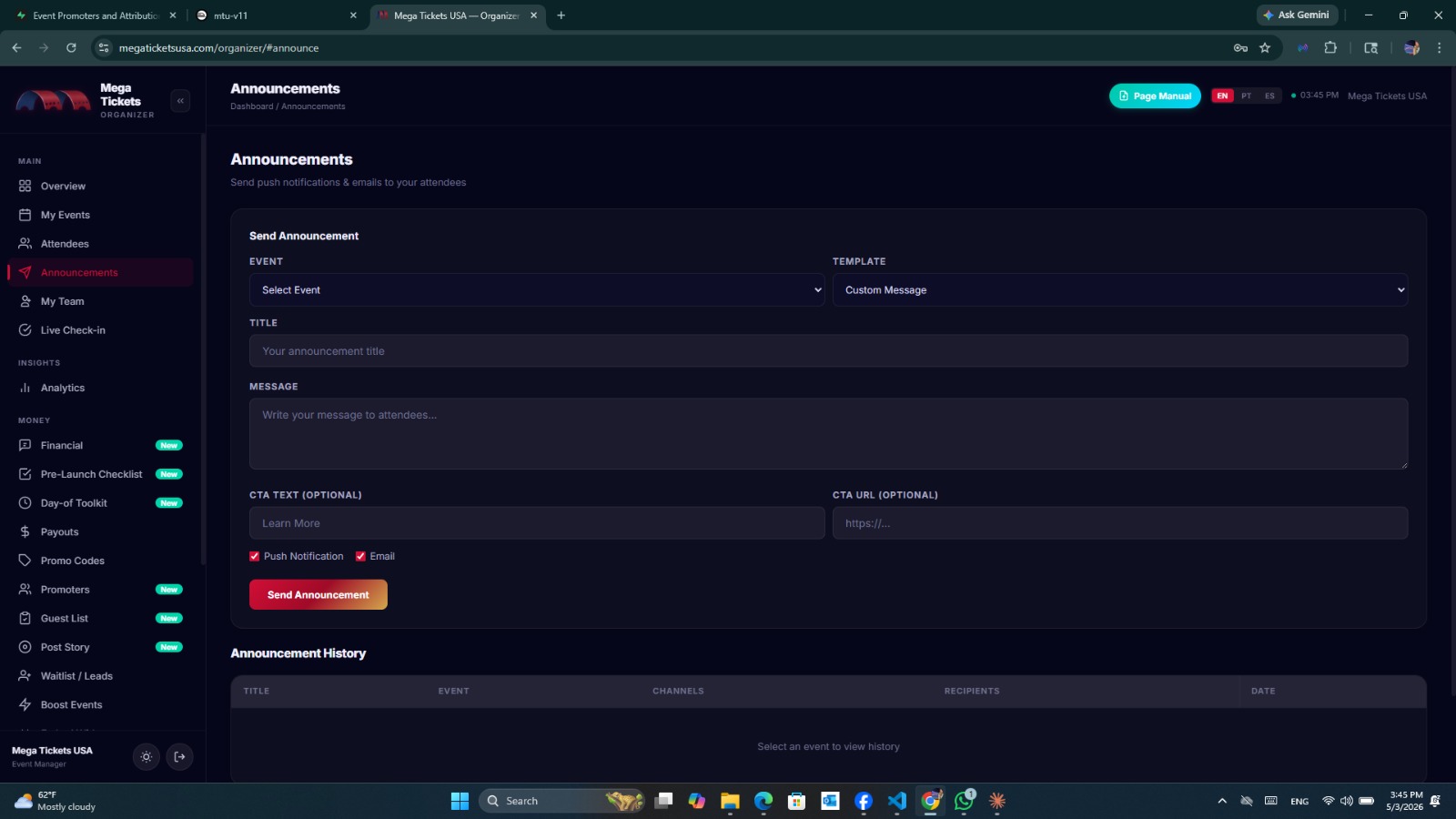
Guest list, comps, transfers, refunds, announcements — and the door, where staff scan rotating QR codes.
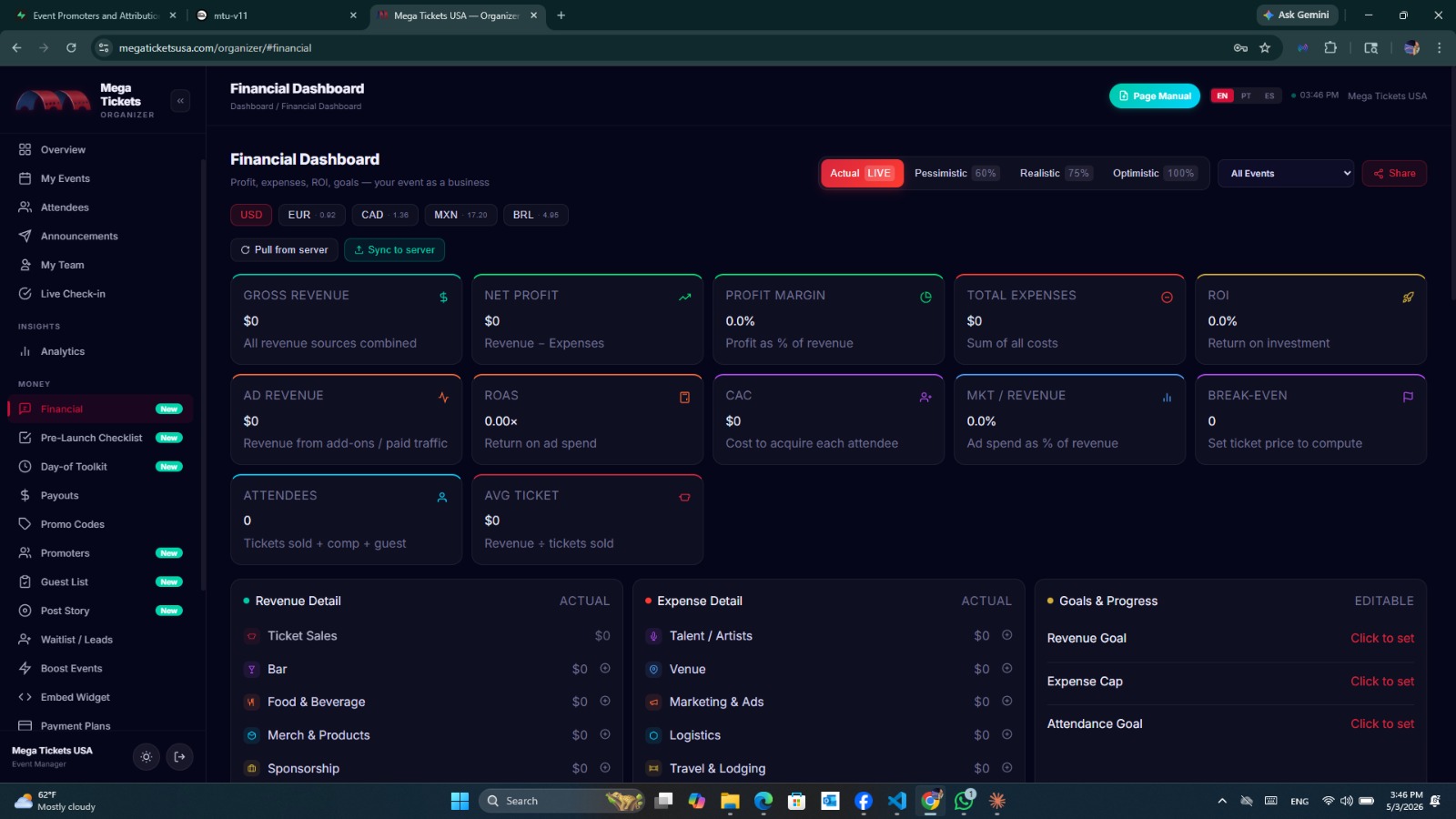
Sales, attendance, payouts — and what attendees did beyond the ticket.
Duplicate what worked and go again with the audience you already have.
Your call, per event
Choose the services that fit your audience. A conference doesn't need Dating. A neighbourhood block party doesn't need hotels. Anything you leave off is invisible to your attendees — it isn't hidden behind a menu, it simply isn't there.
Availability labels on this page are read from the platform configuration, so what you see here is what the platform currently supports — not what we hope to support.
Organizer dashboard
We separate these on purpose. A dashboard that shows a metric it can't yet calculate is a demo, not a product.
These appear against a real event once its attendees start using connected services. Until then they read as empty, not as zero-with-a-chart — an empty state is honest; a fabricated one isn't.
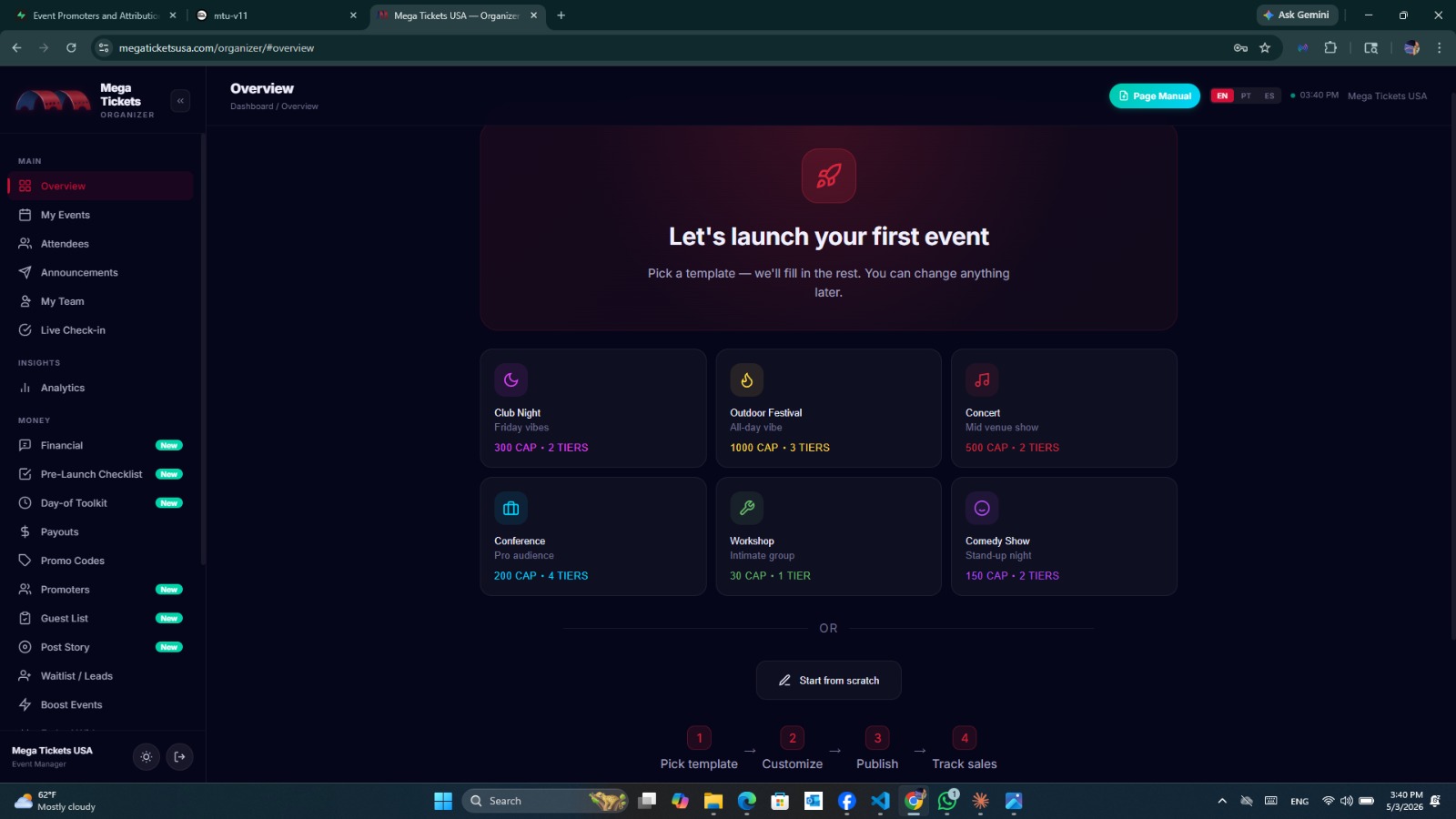
Screenshots of the live organizer dashboard. See the full organizer toolkit.
The model
Payment processing, partner services, taxes or event-specific charges may apply when applicable. Connected ecosystem services are available based on service availability and applicable partner terms; some are operated by partners and carry their own costs.
Trust
No borrowed logos, no quotes we can't attribute. What's below is either running in production or shipped in an app store.
Card details never touch our servers — payment is handled by the processor, and the fee appears as its own line to the buyer.
Live tickets refresh their QR every 30 seconds, so a screenshot taken a minute ago no longer scans at the door.
Sales, check-ins, guest list, promo codes, exports and payouts — the screenshots above are the real product.
Mega Tickets and the staff scanner are live on the App Store, alongside the ecosystem apps attendees actually use.
Mega Tickets USA, LLC — 3334 Concert Ln, Margate, FL. A real company with a real address, not a landing page.
No monthly fee, no contract, no minimum volume. If it doesn't work for your event, you stop using it.
FAQ
There's no monthly fee and no contract. A service fee of 2% + $0.99 per ticket is charged at checkout, and it's paid by the buyer — not deducted from you. Free events ($0 tickets) carry no service fee.
Payment processing, partner services, taxes or event-specific charges may apply when applicable.
The buyer. It's shown as a separate line at checkout, added on top of the face value you set.
Yes — the full face value. Because the service fee is charged to the buyer rather than deducted from you, setting a $50 ticket means $50 of face value is yours.
One exception exists and it isn't a public pricing option: a small number of organizers have negotiated an arrangement where Mega Tickets collects everything and the fee comes out of the payout instead. If that ever applies to you, you'd agree to it first.
No. Ticketing is the only thing every event uses. Everything else is activated per event, and what you leave off never appears to your attendees.
We'd rather you switch on two services that fit your audience than nine that don't.
Selected ecosystem products may be available independently, as a standalone implementation with its own commercial terms. Availability depends on the service, the market and the event, and integration requirements may apply.
Reserved parking is a Mega Ride feature, not a separate product — there is deliberately no "Mega Park". It's currently limited to specific events, which is why you see a "By event" label next to it across the site.
That label is read from the platform configuration, so it always reflects the current state rather than a page someone forgot to update.
No. Mega Hotels surfaces rooms near your event through hotel supply partners. The booking, the stay and the guest relationship belong to the hotel and the supplier, under their terms.
Each connected service has its own commercial arrangement, and it varies by service, market and the partner operating it. There is no single ecosystem revenue share we can quote you on a web page without knowing your event.
What every organizer gets is the same: the infrastructure to offer those services around the event, and the measurement to see what attendees actually used.
No.
Results depend on attendee adoption, event type, pricing, service availability and partner agreements. Mega Tickets provides the infrastructure and measurement tools to create and track additional commerce opportunities — it does not guarantee that they convert.
Anyone who promises you a number without knowing your event is guessing. We'd rather show you the metric and let your own event answer the question.
Tell us about your event
Share a few details and our team comes back with the setup we'd actually recommend — tickets, access levels, sponsor placements and which ecosystem services are worth switching on.
A review and a recommendation — not a contract.
We map tickets, guest list, sponsors and services to how you actually run.
If a service doesn't fit your audience, we'd rather say so than sell it.
Our team will review your event and come back with the setup we'd recommend.
Sell the ticket, run the door, and connect the rest of the journey your attendees are already taking.